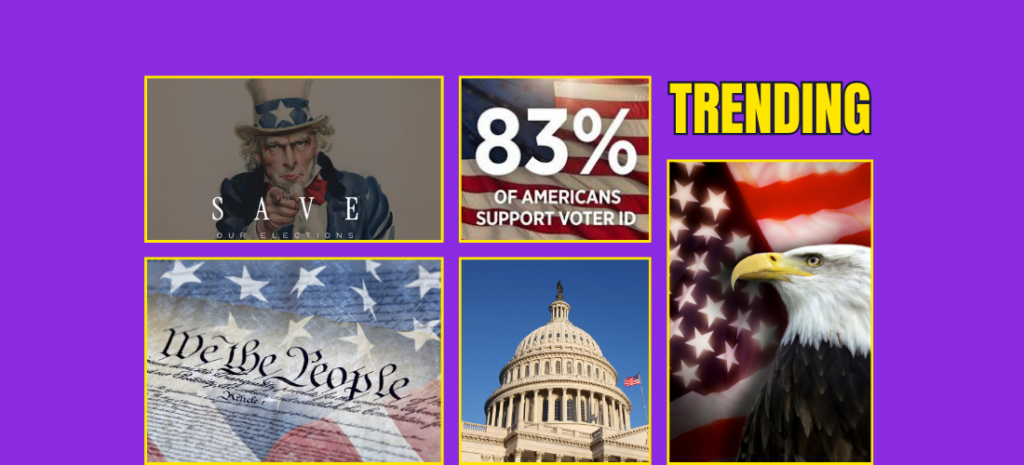
The Core Question: Why Is Voter ID Controversial?
The conversation opens with a point that many people can relate to:
You need an ID for almost everything in everyday life.
From the most basic purchases to major life decisions, identification is required. Jackie and Kashmir walk through example after example, including:
- Buying alcohol or tobacco
- Booking a hotel room
- Opening a bank account
- Renting a car
- Applying for jobs or government benefits
- Getting married
- Traveling, including domestic flights
- Even purchasing certain over-the-counter medications
The question becomes clear:
If identification is required for daily life, why is it controversial when it comes to voting?
The SAVE Act & Election Integrity
The discussion centers around the SAVE America Act, which focuses on strengthening election processes and ensuring that only eligible voters participate.
Jackie and Kashmir emphasize that for many Americans, voter ID is seen as a common-sense safeguard, not a barrier.
They argue that:
- Voting is one of the most important civic responsibilities
- Verification should match the importance of that responsibility
- Trust in elections depends on transparency and accountability
At the same time, they acknowledge that the debate is often framed around access vs. security, with strong opinions on both sides.
Accessibility Concerns — And the Pushback
One of the most common arguments against voter ID laws is that they could create barriers for certain populations — particularly those in rural or underserved areas.
In the segment, Jackie and Kashmir push back on that idea, questioning whether those barriers are as widespread as they’re often portrayed.
They point out:
- Most people already have identification for daily activities
- Modern technology makes documentation easier to obtain
- Systems already exist to help individuals access IDs
They also challenge the narrative that certain groups are unable to obtain identification, calling that assumption itself dismissive and inaccurate.
Media Narratives & Political Messaging
A major theme in this conversation is how media and political messaging shape perception.
Jackie and Kashmir discuss how voter ID laws have been labeled with terms like “suppression,” while supporters argue they are about election integrity.
They also reference polling data suggesting that a large majority of Americans across demographics support voter ID requirements — highlighting a disconnect between public opinion and political messaging.
Their takeaway:
Sometimes the loudest narrative isn’t the most accurate one.
A Global Perspective
To add context, the conversation expands beyond the U.S.
Jackie lists dozens of countries across the world that require some form of voter identification, including:
- Canada
- Germany
- France
- Japan
- India
- Australia
- The United Kingdom
The point being made:
The United States is not unique in requiring voter verification — it’s actually the global norm.
States, Laws & Local Differences
The discussion also highlights how voter ID laws vary by state.
Some states require photo identification, while others allow:
- Non-photo ID
- Signed affidavits
- Alternative verification methods
And in some locations, no ID is required at all.
This patchwork system adds another layer of complexity — raising questions about consistency and fairness across the country.
The Bigger Issue: Trust in the System
At its core, this conversation isn’t just about ID laws — it’s about trust.
Jackie and Kashmir emphasize that for many Americans, the concern is not about restricting votes, but about ensuring that elections are:
They also discuss how a lack of trust in the system — regardless of political side — can have long-term consequences for national unity.
Final Thoughts
This Trending segment highlights how a seemingly simple topic — voter ID — sits at the center of a much larger conversation.
It’s about:
- Access vs. accountability
- Perception vs. reality
- Policy vs. trust
Whether you agree or disagree, one thing is clear:
Election integrity and public confidence matter — and the conversation isn’t going away anytime soon.
👉 Want to stay In the Know?
What’s Everyone Talking About? 🔥